
Introduction
In the ever-evolving digital landscape, the terms SEO, AEO, and GEO are becoming increasingly relevant. These concepts—Search Engine Optimization (SEO), Answer Engine Optimization (AEO), and Generative Engine Optimization (GEO)—are all vital for driving organic traffic to websites. While they share the common goal of improving search rankings, each technique serves a unique purpose and operates differently. In this guide, we’ll break down SEO vs AEO vs GEO, their differences, and how they contribute to digital marketing success.
What is SEO?
Search Engine Optimization (SEO) has been the cornerstone of digital marketing for years. The process focuses on optimizing website content to rank higher in search engine results pages (SERPs) for relevant queries. SEO involves keyword research, content creation, link building, and technical optimizations to improve user experience and site performance.
SEO vs GEO vs AEO: A Quick Overview
When comparing SEO to AEO and GEO, it’s important to understand the specific functionalities that each term encompasses. While SEO focuses on ranking content in traditional search engines, AEO and GEO shift the focus towards more advanced, emerging search trends.
What is AEO (Answer Engine Optimization)?
Answer Engine Optimization (AEO) involves optimizing content for Answer Engines—tools like Google’s Featured Snippets or Siri, which aim to provide direct answers to users’ queries. AEO focuses on providing concise, informative answers in a structured format. Content that is optimized for AEO often appears as a “snippet” or quick-answer box at the top of the search results.
- How AEO Works: Unlike traditional SEO, which might require users to click through several pages, AEO ensures your content directly answers the user’s question. For example, using structured data like FAQ schemas or bullet points allows search engines to pull the most relevant content from your site, which helps drive traffic.
What is GEO (Generative Engine Optimization)?
Generative Engine Optimization (GEO) is an emerging trend focusing on generative AI and chatbot-based queries. This involves optimizing content for AI-driven tools that generate dynamic content, such as ChatGPT or Google’s Bard. GEO aims to adapt content so it aligns with AI models that can provide more conversational and context-aware responses.
- How GEO Works: GEO seeks to make content more adaptable to generative AI tools, which are becoming a key part of how users search for information. These engines focus on the relevance of context over strict keyword matches, allowing content to be generated on-demand based on real-time queries.
SEO vs AEO vs GEO: Key Differences
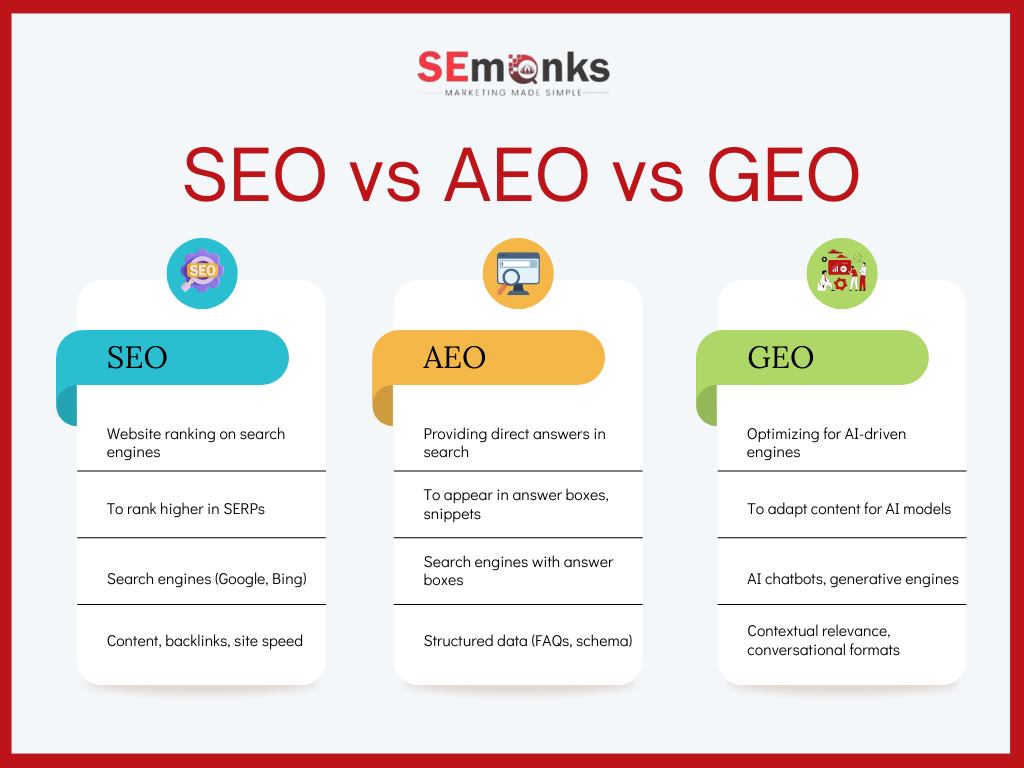
| Aspect | SEO | AEO | GEO |
| Focus | Website ranking on search engines | Providing direct answers in search | Optimizing for AI-driven engines |
| Goal | To rank higher in SERPs | To appear in answer boxes, snippets | To adapt content for AI models |
| Platform | Search engines (Google, Bing) | Search engines with answer boxes | AI chatbots, generative engines |
| Optimization | Content, backlinks, site speed | Structured data (FAQs, schema) | Contextual relevance, conversational formats |
| Audience | Users searching for information | Users looking for quick answers | Users engaging with generative AI |
Benefits of SEO, AEO, and GEO
Each of these strategies brings specific advantages:
- SEO: Helps websites rank higher in organic search results, driving sustained traffic. It is the foundation of digital marketing.
- AEO: Increases visibility in answer boxes, improving brand authority and driving more clicks from search queries that seek quick answers.
- GEO: Prepares your content for the future of AI, ensuring relevance in an increasingly AI-driven search landscape. As AI-based systems grow, GEO will become even more critical for staying ahead of the competition.
How AI Overview Will Change SEO
The AI overview will drastically reshape how search engines function, shifting from traditional keyword-based indexing to context and conversation-based relevance. AI will automate the process of discovering new content, generating responses, and delivering personalized results, which makes it imperative for marketers to adapt SEO strategies to align with these changes.
Does AI Help with Local SEO for Small Businesses?
Yes, AI is revolutionizing local SEO, particularly for small businesses. AI tools help create personalized, locally relevant content, enhancing visibility in localized search results. AI can also improve your website’s responsiveness and help streamline Google My Business optimization, providing small businesses with an edge in their local markets.
How is AI Overview Affecting SEO for Blogging?
AI is impacting SEO for blogs by emphasizing content relevance and contextual matching rather than simple keyword stuffing. Search engines like Google are evolving to prioritize AI-generated summaries, snippets, and answer boxes, making it essential for bloggers to optimize for these features.
What Are the Negative Impacts of AI Overviews on SEO?
While AI brings many benefits to SEO, it also presents challenges:
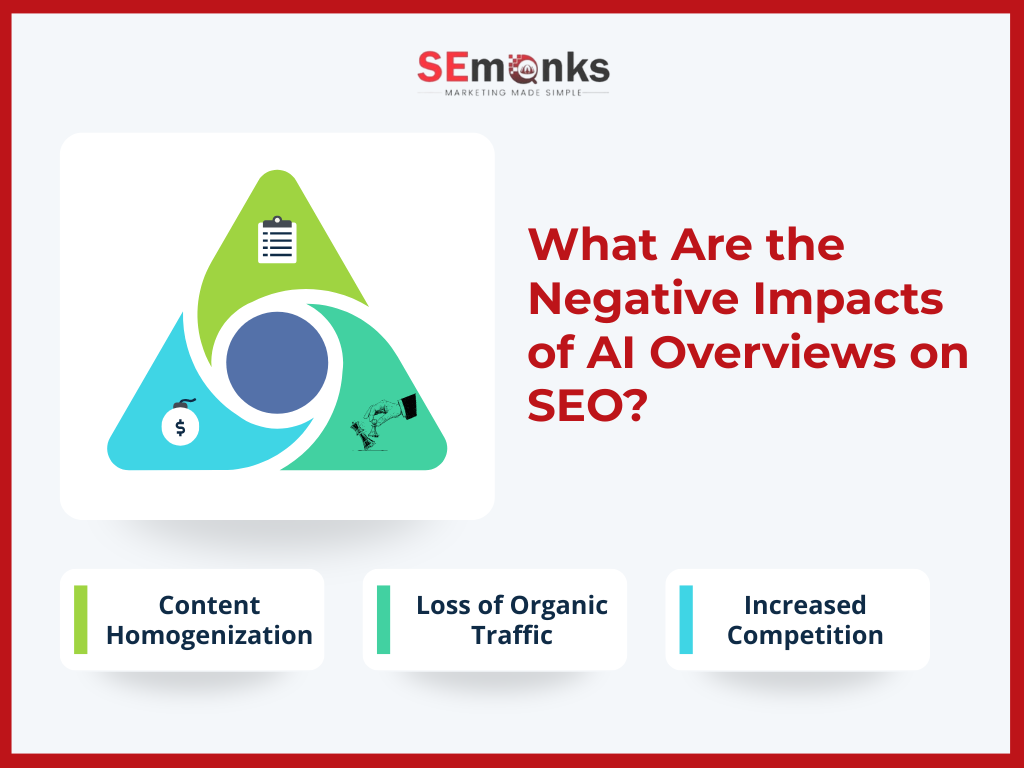
- Content Homogenization: AI could lead to content becoming too generic or repetitive.
- Loss of Organic Traffic: As AI systems become more advanced, they might capture a larger share of user queries, reducing the need for users to click through to websites.
- Increased Competition: With more content being AI-generated, competition for rankings and visibility might intensify.
FAQs:
Q1: What’s the difference between SEO, AEO, and GEO?
SEO focuses on traditional rankings, AEO emphasizes direct answers through featured snippets, and GEO tailors content for AI-driven generative engines.
Q2: How AI overview will change SEO?
AI will shift SEO from keyword-based rankings to context-based relevance and personalized search results.
Q3: Does AI help with Local SEO for small businesses?
Yes, AI aids small businesses in optimizing local SEO efforts by creating personalized, location-based content and enhancing visibility.
Q4: How is AI overview affecting SEO for blogging?
AI is encouraging more conversational and context-aware content, making traditional SEO strategies less effective if not adapted.
Q5: What are the negative impacts of AI overviews on SEO?
AI could lead to content homogenization, loss of organic traffic, and increased competition due to automated content generation.
Conclusion:
As the digital marketing landscape evolves, understanding SEO vs AEO vs GEO becomes increasingly important. Each optimization technique has its strengths and plays a critical role in how search engines deliver content to users. By embracing these strategies, businesses can stay ahead in the competitive digital space. For more insights into optimizing your online presence, visit SEMONKS today.

